Tips to Stop Itching and Scratching Your Eczema

Share
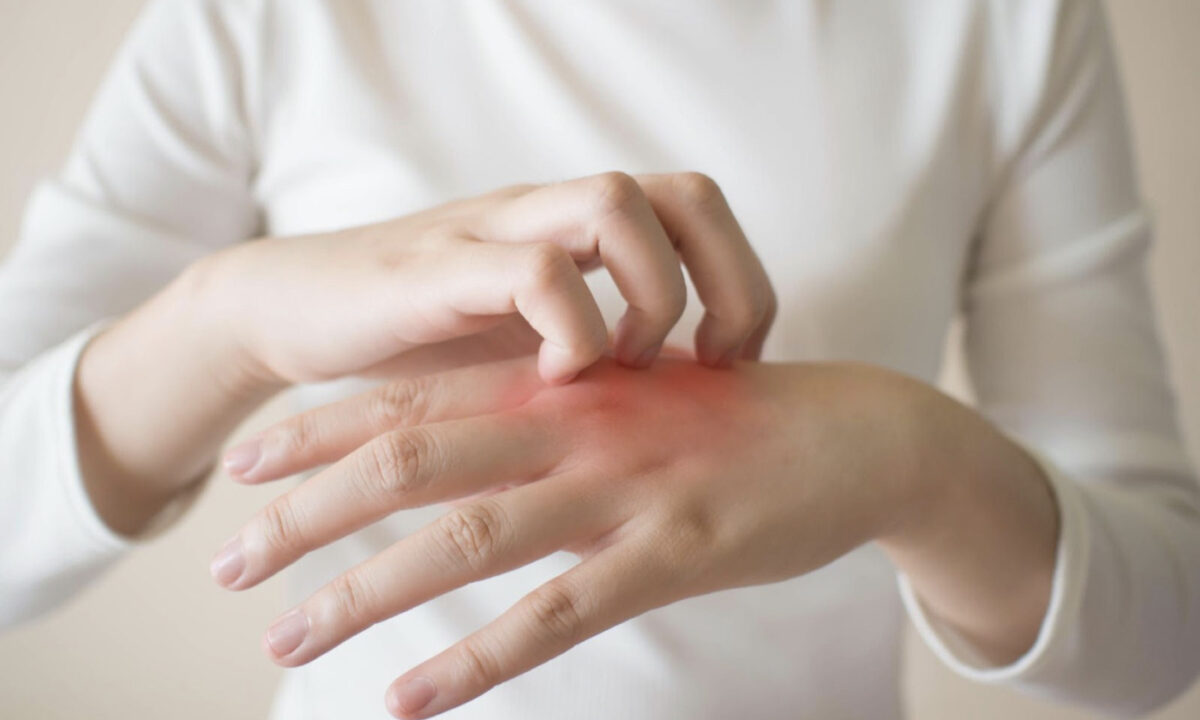
While the skin might appear dry or flaking in the winter, it might react to the humidity in the summer, causing skin rashes and itching. The conditions may worsen during the change of seasons. These are some common symptoms of eczema.
Eczema is a skin condition of small spongy blisters of inflammatory cells that gather in the epidermis and dermis. It can cause scratching due to the itches, rashes, and blisters.
Dr. David Kuo from Taiwan Fuyuan Traditional Chinese Medicine Clinic analyzed the causes of eczema from both traditional Chinese and Western medicine perspectives. He recommends acupressure massage and atopic ointments to ease the itching and scratching of eczema.
What is Eczema?
Eczema, or clinically, dermatitis, is a skin condition of small spongy blisters of inflammatory cells that gather in the epidermis and dermis. Eczema compromises the skin’s normal barriers. Hence, it reacts to external factors quickly. These external factors can be a cold, dry winter, different chemicals, or a hot, humid summer. For instance, sweating can cause irritation and inflammation if not dried quickly.
On the other hand, dry, cold weather reduces the moisture content in human skin, which can also trigger inflammation. Some patients also notice eczema conditions worsen during the change of seasons.
Eczema can cause scratching due to the itches, rashes, and blisters. The skin then oozes tissue fluid, and dampness appears.
Eczema often appears around the elbows, neck, armpits, posterior knee joints, and groin; its pathogenesis characteristics are mostly symmetrical. Dr. David Kuo said that the temperature is relatively high in these spots where the artery beats. Hence, they are prone to eczema.
What Causes Eczema?
Dr. Kuo pointed out four major factors that cause eczema:
- Environment: drastic temperature change, seasonal change, extremely hot or dry environment, pet hair, dust mites, fluffy toys, beauty cleaners, chemicals, perfumes, skin care products, and non-absorbent clothing with artificial fibers.
- Emotion: High levels of stress.
- Heredity: the most significant factor of eczema.
- Food: fish and shellfish, spicy food, beer.
Five Types of Eczema
Dr. Kuo pointed out that there are different types of eczema based on various manifestations and distributions. The five common types of eczema (dermatitis) are as follows:
- Atopic eczema: The most common type of dermatitis that can occur all over the body.
- Contact eczema: It includes irritating contact dermatitis and allergic contact dermatitis. It can be a person’s feet coming into contact with shoes made of unsuitable fabrics or materials.
- Seborrheic eczema: It is caused by excessive sebum secretion. It usually occurs on either side of the nose and between the eyebrows. It can appear red, inflamed, and scaly.
- Asteatotic eczema: It is also known as xerosis. It usually occurs on the limbs and toes. Similar to athlete’s foot but not contagious. The conditions may appear after swimming, and there is no pus when scratched.
- Neurodermatitis (lichen simplex chronicus): It is a condition caused by scratching the skin surface for an extended period, which thickens the epidermis and forms a psoriasis-like appearance.
According to traditional Chinese medicine (TCM), skin conditions are said to mirror what is happening inside of one’s body and can indicate excess dampness, a concept within the Chinese medicine paradigm. Eczema reflects internal health issues and may be triggered by alcohol or eating only fruit and salads for a long time, which can accumulate dampness in the body.
Dampness usually leaves the body through sweat and urination. However, unhealthy habits like a lack of sleep or sitting too much, and irregular bowel movements, can leave more dampness in the body.
How To Stop Eczema From Itching
TCM treatments often involve the meridian system in the human body. Meridians are responsible for transporting energy (qi) and blood (fluid) throughout the body.
Qi and blood are the most important fundamental substances necessary for life. The concept of qi can be understood as the sum total of energy or vitality that constitutes life in the body. It comes mainly from the food we eat and the air we breathe. Blood, in TCM, refers to the fluids that nourish the entire body. The two substances of qi and blood circulate to maintain balance and stability in various tissues and organs. Meridians are the channels that help these substances move throughout the body.
When the meridian system is blocked, it will affect the transport of substances, and abnormalities will appear.
Acupoints are a unique term in Chinese culture and TCM, and they are places with many nerve endings and blood vessels congregate.
TCM has found that acupoints are located in the viscera and meridian circulation routes distributed on the surface of the human body. They are specific locations where qi and blood gather, transfer, and enter and exit, and are also regarded as energy gathering points of the human body.
Stimulating acupoints by using acupressure massage and moxibustions improves the circulation of the qi in the human meridian system and can treat illnesses correspondingly.
Dr. Kuo recommend using acupressure massage on acupoints to relieve itching caused by eczema. He explains how and where below.
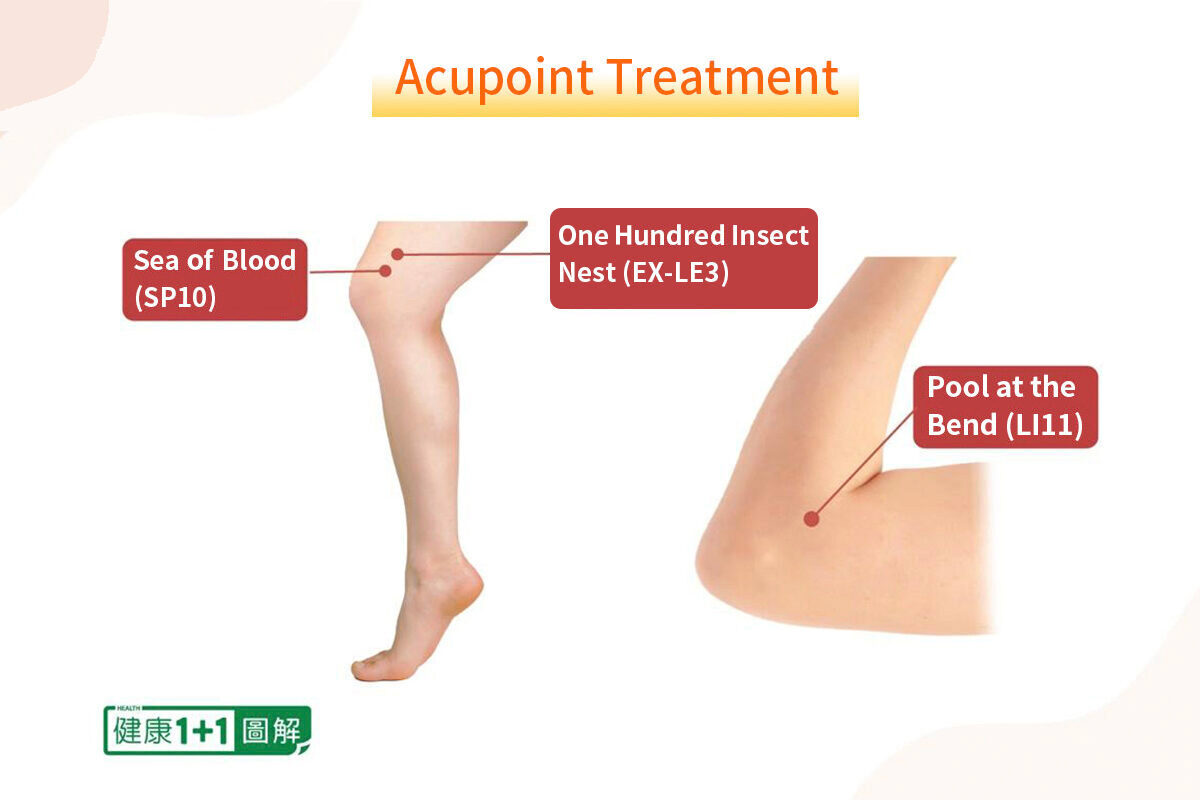
Acupoint 1. Pool at the Bend (LI11)
Directions: To find the acupoint, bend your arm toward the chest. LI11 is located close to the edge of the bones, on the outer end of the elbow, where it dents. Acupoint LI11 connects acupoint Enclosed Valley, where the meridian energy gathers. In TCM, too much heat can disrupt your qi energy. By pressing the acupoint LI11, it can help dissipate the excess heat in the body.
Acupoint 2. Sea of Blood (SP10)
Directions: SP10 is located just above the knee on the inner leg. To find the acupoint, grasp and hold the kneecap with your palm. The point is located where your thumb sits on the inner thigh.
Acupoint SP10 is an important point for nourishing blood and promoting blood circulation, and it is also often used to treat chronic eczema, chronic urticaria and other diseases.
Acupoint 3. One Hundred Insect Nest (EX-LE3)
Directions: Acupoint EX-LE3 is just one inch above acupoint SP10. EX-LE3 is commonly used for treating eczema in TCM.
A joint study of German and Chinese scholars was published in the Journal of Acupuncture and Tuina Science. Among 54 eczema patients, 47 participants recovered or improved symptoms by using acupuncture. The recovery efficacy reached almost 90 percent.
Several randomized controlled clinical experiments have also shown that acupuncture can improve eczema symptoms and reduce itching.
-
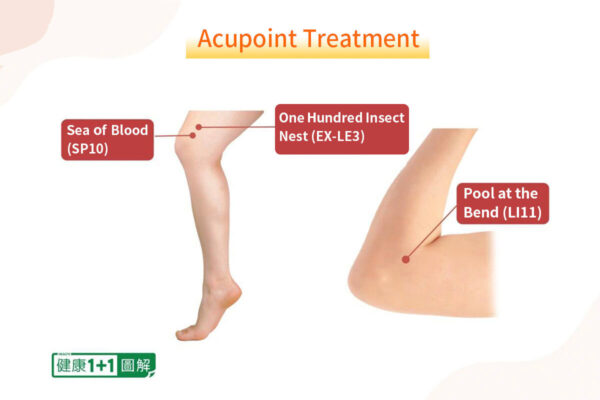
- Left: Pool at the Bend (LI11); Center: One Hundred Insect Nest (EX-LE3); Right: Sea of Blood (SP10). (Health 1+1)
Many ointments are available to treat eczema, such as indigo ointment (qing dai ointment) and purple cloud balm (ziyun balm). A study published in Scientific Reports found indirubin, a potent anti-inflammatory phytochemical derived from indigo and the active ingredient in qing dai ointment, helps promote wound healing. Another study published in Molecular Immunology found it reduces skin inflammation. Shikonin, another plant compound and the active ingredient in ziyun balm, is antibacterial, anti-inflammatory, and stimulates wound healing, according to research published in Frontiers in Pharmacology.
Food Therapy for Eczema
Dr. Kuo also suggests 2 soup recipes to relive the symptoms of the eczema
1. Si Shen Pork Ribs Soup
Purpose: Strengthen one’s spleen and dispel internal dampness.
Ingredients:
- 100-200 grams pork ribs
- 20 grams chia
- 20 grams lotus seeds
- 20 grams Chinese yam
- 20 grams fuling
- 20 grams coix seeds
- two liters water
Directions:
- Blanch and drain pork ribs and put aside.
- Pour two liters of water into a pot. Bring it to a boil.
- Add all the ingredients.
- You can also add three slices of Don quai, fresh ginger, and salt to taste.
- Cook until everything is soft.
- Serve hot.
Benefits: Si Shen soup is a good food therapy for eczema patients. It not only strengthens one’s spleen but also improves the digestive system. The soup removes excessive water retention in the intestines. The doctor said that the herbs used in the soup contain rich carbohydrates and can replace rice.
2. Lotus and mung bean soup
Purpose: Eliminate heat and remove dampness. The recipe is suitable for people who experience a sticky and unpleasant taste in the mouth, anxiety, and insomnia.
Ingredients:
- 30 grams mung beans
- 30 grams lily bulbs
- 30 grams fresh Chinese yam
- 15 grams prickly water lily, and rock sugar to taste
Directions:
- Fill a pot with water and bring it to a boil.
- Add all the ingredients to the boiled water.
- Boil until everything becomes thoroughly cooked and soft.
- Add rock sugar to your taste before serving.
Benefits: Mung beans clear heat and remove toxins in the body. Lily bulbs help calm one’s mind and improve sleep quality. Chinese yam nourishes the stomach.
Some of these herbs may sound unfamiliar, but they can be found at shops we trust here:
T S Emporium: https://m.tsemporium.com/en_us
Kamwo Herb & Tea LLC: https://kamwoherbs.com/
How to Care for Eczema Daily
Patients with eczema should be cautious of the following in their daily life:
- Do not wash the affected area with hot water or irritants such as soap.
- Avoid scratching. Instead, gently pat or tap the affected area, and treat the area with a cold compress to reduce itching.
- Have a healthy and regular diet. Avoid allergens.
- Choose an appropriate skin moisturizer or emollient.
- Avoid staying up late and practice work-life balance.
- Manage stress and anxiety, and practice mindfulness.
- Avoid excessive sunbathing. Dry sweat immediately after a workout.
- Choose sweat-friendly, breathable, and comfortable clothing.
Amber Yang worked as a marketing manager for natural skin care products for years and as a health and beauty reporter and editor for ten years. She is also the host and producer of the YouTube programs “Amber Running Green” and “Amber Health Interview.”